Teacher interested in ESL methodology, IELTS, classic novels, music, and In Our Time with Melvin Bragg, based in Phuket, Thailand.
Showing posts with label blog. Show all posts
Friday, 9 November 2012
Ranting Under the Stars in Phuket
Painting by Pierre Koukjian (http://pierrekoukjian.com/)
Moving house is a tiresome business. Kay and I are tired, but this is not something to bemoan as we’re happy, settled and sensitive to the fragility of life and our place within it. Thus, tomorrow, being our day off we intend to rest and bathe in red wine. It’s the only way.
Currently, I’m wading my way through Dostoevsky’s ‘The Idiot’ and being a novel full of agonizing cruelty and deceit, it provides a soothing backdrop to my every day activities in Phuket. Daily contact with lies, theft, gossip, underage pregnancy, a revolving staff turnover, mosquito infestation, rats and wife beating all compete for my attention, but I feel reinvigorated by Russian tales infidelity and introspection.
“Long live Fyodor!”
Living in a foreign country has its moments of frustration. These can cause one to react in outbursts of spiteful indignation. Nasty caustic words are hissed and then regretted; people are offended and disappear never to be seen again. These undesirable occurrences are a result, as I see it, of cultural egoism and arrogance and it’s essential to recognize these traits to remain sane. In consequence, I have worked hard over the last few years to understand why confusion between cultures comes about; it has been an enlightening albeit laborious process. Over time, the bewilderment one feels when something doesn't fit your cultural experience, begins to melt away allowing to cultural patterns of thought and behavior to emerge. As a result, actions that were once seem as “irrational” are dealt with more level-headedly, and one becomes more in tune with how the other culture operates. Therefore, experience teaches which action is appropriate to achieve the maximum social harmony within a given cultural context and utterances of “wh” questions over trivial matters decrease in number.
These days I find myself reacting with an ironical smile rather than disgust when I get charged a ‘Farang price’ on goods or services in Thailand. For example, one day last year I fell victim to this unofficial dual-pricing at a local nature reserve. Consequently, I found myself at home, wriggling in my chair completely at a lost. Why did this happen? Did I not earn Thai Baht, too? Surely these people feel shame, dishonour, corrupt and degraded by such actions? Gloomily and reluctantly, I asked a Thai acquaintance why this crass system of daylight robbery occurred. His answer got me thinking: “Because Farang are rich” he said, his face beaming with sincerity. Suddenly, I felt a moment of spiritual darkness; vague expressions and phrases pulsated inside my head. Is my brain functioning correctly? Conscious of eyes watching me I said with genuine passion: “So why are rich Thais exempt from paying the higher rate?” He giggled like a school boy; his upper lip twitched as if in spasm. He stood up, excused himself and left the room. I now refrain from asking “why” questions in Thailand.
Presently, I feel rather more at home in Phuket. Whether this is due to me becoming more learned in the intricacies and nuances of Thai culture or something else, I am unsure. After all, it’s tough being objective a foreign land. Whatever the causal factors may be, I feel mellower now, less likely to plunge into darkness over a situation that I can’t relate to.
As a result, I've become aware that a position of cultural relativism is desirable when living in a developing country. What’s the alternative? Hang out in ex-pat bars, drink yourself to death and listen to Jimmy, a roofer from Essex, foaming at the mouth about how things wouldn't be done like this is England bla bla bla... Balls to that! I'd rather vomit. Not only are the majority of ex-pats lecherous, they are also disproportionately irritable over every trifle. Of course there are many upstanding exceptions to this, but few come to mind. Thus, I keep my distance and try with utmost precision to converse with constructive members of society. These, however, are thin on the ground.
In short, life is good: I live near the beach, eat nice food, drink average wine and don’t detest life. Moreover, my tug-of-war with Thai culture has reached a point of learned understanding and acceptance, allowing me to look to the future with a cynical, yet loving smile.
Wednesday, 24 October 2012
Amphawa, Thailand
I was a little apprehensive before coming to Amphawa due to its tourist credentials; however, one can have a distinctive, dare I say, authentic experience with careful planning. In short, finding the right accommodation is the key.
The are a multitude of places to stay close to the main town; these are to be avoided. Do a little research and venture further up river. A long tail boat and merry captain with set you back about 700 Baht per day, allowing you to sail around the beautiful meanders of the Mae Khlong River sipping on a cold beer. Good times.
Just a couple of kilometres up one of the many tributaries houses stand on stilts, their back doors flirting dangerous with the water line, leaving one baffled at inhabitants desire to gamble with the elements. In fact, just last year the area was badly affected by flooding; however, the locals, undaunted by this mere trifle, continue to carry on as if nothing had happened. Braves souls if you ask me. I slept approximately fifteen metres from the waters edge and my dreams were filled with choppy seas and vaporous swamp lizards.
Here are some pics of the area:
This was the scene from the breakfast table.
Twats with snakes:
"You photo snake, no worry. Little money. Come come."
The are a multitude of places to stay close to the main town; these are to be avoided. Do a little research and venture further up river. A long tail boat and merry captain with set you back about 700 Baht per day, allowing you to sail around the beautiful meanders of the Mae Khlong River sipping on a cold beer. Good times.
Just a couple of kilometres up one of the many tributaries houses stand on stilts, their back doors flirting dangerous with the water line, leaving one baffled at inhabitants desire to gamble with the elements. In fact, just last year the area was badly affected by flooding; however, the locals, undaunted by this mere trifle, continue to carry on as if nothing had happened. Braves souls if you ask me. I slept approximately fifteen metres from the waters edge and my dreams were filled with choppy seas and vaporous swamp lizards.
Here are some pics of the area:
This was the scene from the breakfast table.
Twats with snakes:
"You photo snake, no worry. Little money. Come come."
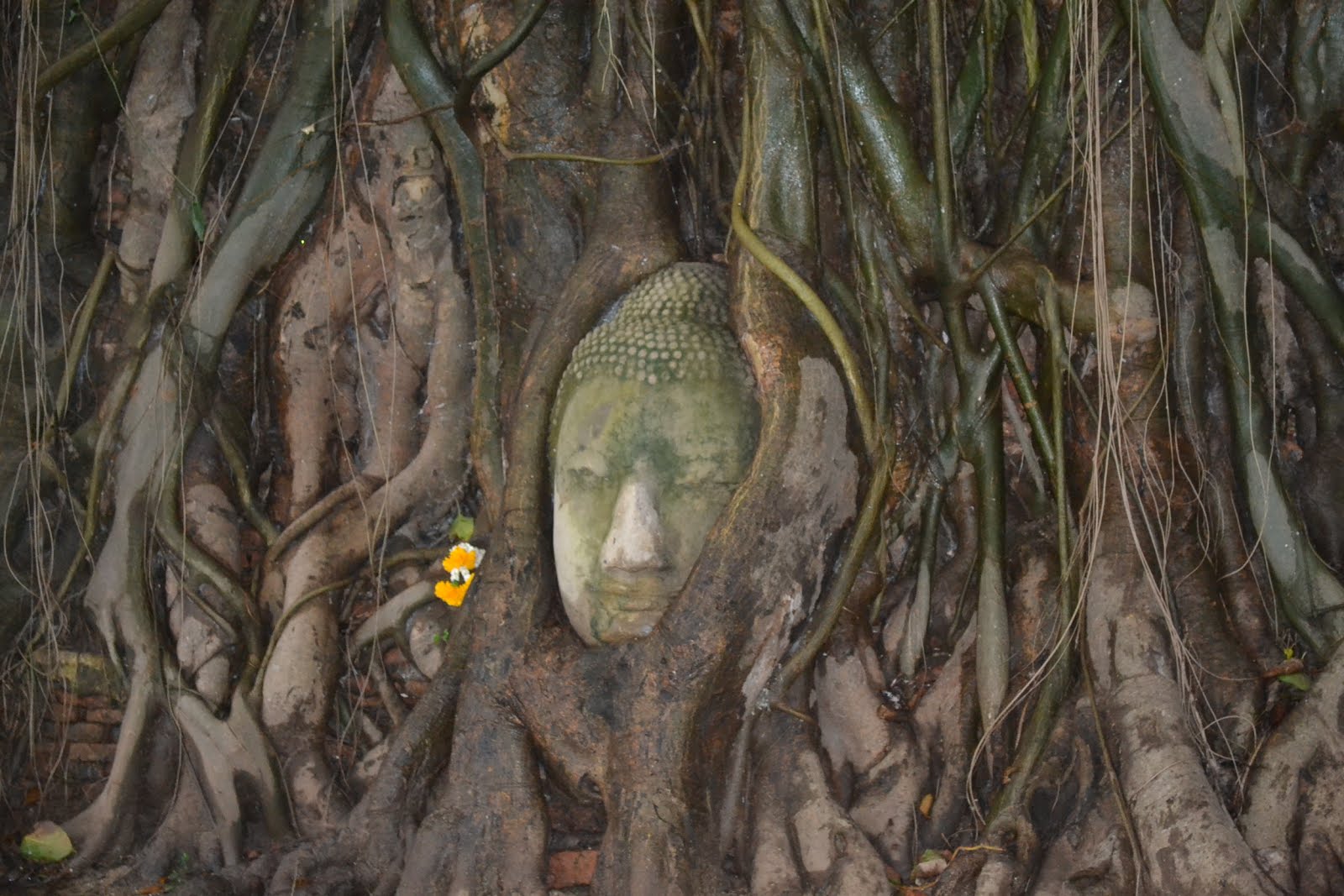
Ayutthaya, Thailand
"Only a fool could not take a decent picture in Ayutthaya."
These are the very words that I thought after doing some pre-trip wiki-research. Predictably true to form, I managed to take millions of pictures most of which could have been bettered by a blind chip wasted on ketamine.
Here are the pick of the pitiful bunch:
These are the very words that I thought after doing some pre-trip wiki-research. Predictably true to form, I managed to take millions of pictures most of which could have been bettered by a blind chip wasted on ketamine.
Here are the pick of the pitiful bunch:
Tuesday, 9 October 2012
Rusian Honey Cake
It was my birthday recently and, in keeping with tradition, I received a cake, which I took great pleasure in sharing with my students and colleagues. To my surprise this was not your standard sponge and cream affair. I was informed that it was a 'Russian cake.' Now, a gastronome I am not, far from it, but I do like dabble a little in foreign cuisine, and what sat in front of me was uncharted territory.
The cake from above looked nothing more than a standard sponge with crushed biscuits sprinkled on top. How wrong I was. From the side, a multitude of layers were visible; white, cream and various shades of brown sat spaced delicately on top of one another giving it a look of great complexity, but at the same time it overall appearance was that of simple, honest home faire.
The proof is in the pudding, as they say, and in this case the pudding excelled. It tasted like nothing any of us had tried before. Subtle honey sweetness engaged the taste buds and this was followed by a creamy deeper honey essence once swallowed. It was a strange sensation. Rich, heavy and ultra sweet, three adjectives I would not usually desire for when cake shopping, were the elements that brought it into its own.
I found out later after a little internet gimping, that the dessert in question in ’15 Layer Traditional Russian Cake.’ Thus, in case anyone wants to have a blast at making it at home, I have included a recipe and a few photos of my birthday delight. Enjoy.
Recipe:
Ingredients:
2 eggs
3/4 cup sugar
1 teaspoon baking soda
1 tablespoon liquid honey
100 g margarine or 100 g butter
2 cups flour
Cream Filling and Coating
750 g sour cream
1/2 cup sugar
1 tablespoon honey
250 -300 g crushed plain sweet biscuit crumbs, for coating
1/2-1 cup ground walnuts, for coating
Directions:
1 Preheat oven to 180°C.
2 Beat eggs well with sugar; add baking soda and liquid honey (warm).
3 Melt the margarine/butter in a casserole or pot; add the mixture (margarine should not be too hot).
4 Put the casserole on a low heat, add the flour while mixing and mix until the mass is without lumps (the mixture will be very thick and very hard to stir). Remove from heat and cool.
5 Dip the dough in flour, divide, roll each layer very thin (1-2mm), cut circles as round as possible (approx 18cm diameter), and bake at 180°C for 2-4 minutes or until golden brown in colour; repeat with remaining dough and allow to cool before assembling.
6 Beat sour cream, sugar and honey until the sugar dissolves-the mixture will still be fairly liquid.
7 Coat each layer with a generous layer of cream; assemble the cake, coat the sides with cream and sprinkle top and sides with crumbs and ground walnuts. Allow to set at least 6 hours before eating.
Nutritional Facts for 15 Layer Russian Honey Cake
Serving Size: 1 (94 g)
Servings Per Recipe: 16
Amount Per Serving% Daily ValueCalories 282.4 Calories from Fat 14651%Total Fat 16.2 g25%Saturated Fat 6.5 g32%Cholesterol 46.6 mg15%Sodium 183.1 mg7%Total Carbohydrate 31.4 g10%Dietary Fiber 0.5 g2%Sugars 19.4 g77%Protein 3.7 g7%
Recipe from food.com
Monday, 1 October 2012
Visas Blues in Phuket
Some cool Graffiti in Phuket town by the French artist NOE TWO.
http://www.isthisthefuture.co.uk/category/artist/noe-two-france/
Living in a foreign land has its moments of frustration, and Thailand is no exception. Mundane tasks like going to the market can turn into epic misadventures for the uninitiated. Daily, I observe foreigners with knitted brows and twisted features gesticulating manically at ticket touts. For some, dealing with a traffic attendant can cause a twitchiness in the left arm that will one day have them curling up in pain like a like a caterpillar on floor. Subtle differences in culture unknowingly result in resentment for unsuspecting travelers and locals alike. Over the last decade or so, I have lived, for extended periods of time, in a number of countries, China being one of them. And in all places conflict ebbs and flows between the local population and bright eyed visitors. However, nowhere suffers from this problem quite so acutely, in my experience, than Phuket. A paradise island it may be, but for the ten million visitors who grace its golden shores annually, certain cultural nuances cause them to act in ways that leave them searching deep inside themselves for answers.
Choosing a place in Phuket that epitomizes the above is not easy due to the fact that there are so many, but, if one feels like having a peep at the darker side of human nature, a place where grown men are reduced to blubbering messes and cultural arrogance meets theatre, then Phuket town’s immigration office is your first port of call.
For those who have not been to Phuket Immigration office, count yourself fortunate. It is a stuffy little box in which six distinct sets of people frequent for visa reasons: leather faces old men with droopy elbow skin, women with leather faces with even droopier elbow skin, gangly Russian women hobbling about in tasteless 10 inch heels, hung over thugs in sportswear stinking of booze and stale cigarettes, stoic faced men in suits staring at Blackberries, and yacht people wearing deck shoes and knee length chino shorts with sun glasses on their head. All are here for to get an extension on their visa and all anxiously avert eye contact. A silent, frantic atmosphere envelops the room and the only sounds that can be heard are conversations in broken English between the officers and the expectant visa hopefuls. All of which are tinged with mistrust and the threat of violence.
“I wanna apply for my marrage visa.”
“You, sign your name!”
“I did already, see?”
“I said, you sign name! You have name?”
“There it is right there!” (points with finger)
“No name. You have name, yeah? You not have name? You come back. You not correct paper.”
“Look, I was here last week and he (points condescendingly at another officer) told me which documents to bring. And here they are.” (sarcastically drops papers onto the desk; mouth opens to reveal tobacco stained teeth; right eye twitches in rhythmic spasms.)
“You go get son birth certificate.”
“Why do I need that for a marriage visa? I have done this for 10 years and never before have I needed that, and what’s more, HE said I didn’t need it. (points again at the other officer who shuffles uncomfortably in his chair.)
“You go.”
“What do I need to bring!” (teeth clench and spittle forms and the corner of the mouth; eyes red and protruding.)
In situations like this the officer is in full control. The visa applicant is wholly dependent on him and the man in uniform plays this game in full knowledge of his powerful position. It can be painful to watch. Two diametrically opposed cultures are at logger heads and at pains to meet half way, but the reality is that there can only be one victor; therefore, the applicant inevitably leaves either happy or embittered, and the officer doesn't care. Why would he? He’s only doing his job after all.
After experiencing many encounters like the above I am not really surprised that the officers act in this way. Every day they come face to face with angry foreigners who are frustrated by the often nonsensical mountain of bureaucracy that they have to climb. Consequently, both parties are frustrated and short tempered and fireworks are inevitable. For me, though, I refuse to let this formality get the better of me. I smile and am always well prepared. Nothing can fluster me while I am in the chair. I wear blinkers, blocking out the silliness around me, focused on my goal. This goal was achieved again last week when I was granted another one year visa. As I walked out the office and the midday sun caused me to squint, I smiled warmly at a pensioner and his twenty five year old wife, safe in the knowledge that it would be ninety full days until I had to set foot in the place again.
Thursday, 6 January 2011
Marching Forward into 2011

Dear all:
The sun of 2010 has already set and disappeared resolutely beyond the horizon, leaving me with what feels like a clean state; this state provides me a canvas on which to draw up plans, however feasible, for the forthcoming twelve months. I, for one, have high hopes for 2011; what those hopes entail and where they will lead me is another matter entirely, but I know for sure, that whether trivial or not, I am going to try and enjoy every last second of my experiences.
This is about as upbeat as I can be really, seizing the opportunities when they arise, and attempting, as pro-actively as possibly, to mould my future into a sculpture of emanating beauty; after all, we only live once, so why not? Of course, in the past year I have not always been so full of optimism; far from it, in fact. There have been some lows that have scraped viciously and without remorse at the depths of my humanity, causing murky thoughts, not to mention actions; however, I have unceremoniously thrown away their toxic influence, and moved on the wiser.
However, that being said, the previous year has had many positive moments, ones to remember. Business has been swift and profitable, albeit at times asphyxiating and all-consuming. Nevertheless, I am very aware that nothing in this life can be achieved without graft, nothing; thus, I have thrown myself head-first into the project and, whether the gods are smiling or not, I’m all in.
Kay and I remain as strong as ever, yet we have had a tumultuous 2010 with her ‘so called’ family. Honestly, and with utmost sincerity, to go into details on this issue at this point would result in an unfettered diatribe of bilious battery acid being spat all over my computer, so, for the sake of midday decency, I will refrain from exposing the finer details. In short, Kay and I are hunky-dory, as always.
Aside form making money and prancing about like a meerkat on methamphetamine 15 hours a day, I have spent the last year reading as widely as the slivers of free time that I have allow me. These novels have provided me with essential vitamins, nourishing my mind and, for the best part, prevented the stresses of daily life erupting in a explosive aneurysm. For this I am indebted to Chekov, Camus, Hemmingway, Russell, Hunter Thompson, and last but not least, Bryan Magee on YouTube, for his succinct dissection of the great thinker of our time (Especially Wittgenstein)
Anyway, on that note, I am off to gorge myself on another chapter of Russell’s ‘History of Western Philosophy’ that was so generously send to me by one of today’s great philanthropists, Mr. Stephen Hanna.
For all of you who I have now been in touch with in some time, please write back and tell me how life is treating you.
To you all, Have a wonderful and successful 2011.
Friday, 19 March 2010
Lessons From History

All political systems are flawed – This creates a fundamental problem when attempting to beat a path thought a dense thicket of societal inequality. Idealistic notions of cooperation between men, intellectual advancement and the slicing of society’s cake into equal pieces are dreams of any would be revolutionary.
Throughout history one problem has remained for those who desire to dismantle what is: the overthrowing of the state requires by default a need to defend oneself from the inevitable backlash, by the use of force – in other words, to become what you have opposed. Marx’s prediction that the state would ‘wither away’ has thus far in our history not proven to be a natural inevitability. More odiously, secrecy and ruthlessness have soon appeared on the revolutionary stage before the final piece of bunting has even been removed.
This paradoxical mirror imaging of the enemy is of course a matter for one to digest and rationalize in whatever way fits - One man’s revolutionary is another’s terrorist after all. Thus, what’s a budding Trotsky to do when faced with this seemingly intractable dilemma? He can sit on his hands and dream about a future that will never come, or puff out his chest, clear his throat, and embrace the unavoidable – it’s a do or don’t situation.
The reason for all this talk of subversive is this: as soon as night gives way to day tomorrow the sauna like streets of Bangkok will be shimmering with renewed revolutionary intent. The dramatically diminished numbers of UDD protestors would have had even the tightest fisted of gamblers laying his mortgage on a red free Bangkok by the weekend, but tens of thousands are to come from the Northern and North Eastern provinces tomorrow. For all those involved in grass roots politics, a collective tilt of the hat must be given for this admirable organizational feat that in reality gives the red shirts their last bite at the revolutionary cherry.
The potent whiff of violence is in the air once again - As long as the UDD’s mass gathering fails to achieve the dissolution of the lower house, there is a real possibility that the group could change tactics in favour of disruptive or even violent direct action. The blocking of main thoroughfares and shutting down the cities sky train system are the most likely cards to be played in tomorrow’s showdown.
Prime Minister Abhisit has now called for talks with the red shirts leadership on at least two occasions, both of which have been vehemently denounced from the stage at the main demonstration in central Bangkok – an amicable solution looks increasingly unlikely.
Within a democratic system the prize of protest is dialogue. This has been rejected by the red movement and could prove to be terminal to the group’s future. Participation in a process could have cemented the way for possible alliances with more minor parties in the coalition. In Democratic terms, changing the balance of power by these means has more weight when compared to a rushed stick-em-up job, which could end in tragedy.
As the history of revolution has clearly shown, disposing of the status-quo is a business in which idealistic intentions quickly become dogma. The political freedom that opposition grants dissolves frantically into a despotic and dangerous mirror image of what came before; like Siamese twins, inseparable in terms of action. The red shirts refusal to speak to the government may come back to bite them if violence takes centre stage tomorrow.
There is a fine line between agitation and violence, likewise democratic means and undemocratic means; therefore for the UDD to remain a credible political force they need to tilt their heads towards the past and learn form the succinct lessons that history has to offer.
Wednesday, 17 March 2010
BANGKOK - THURDAY 18TH MARCH


The United Front for Democracy Against Dictatorship’s offensive on Thailand’s capital Bangkok looks to be entering it’s twilight hours as thousands of supporters make their way home, weather beaten and hungry.
Paradoxically, security levels have been beefed up in response to alleged CIA intelligence concerning a ‘hardcore’ element within the movement bend on stirring violent unrest. Security authorities in Bangkok claim to have cause for concern as possible acts of ‘sabotage’ are planned around the city. The U.S government vehemently denies these claims. Deputy Prime Minister Southep Thughuban commented yesterday stating, ‘If these attacks take place it would have a devastating impact.’
Numbers at the protest have fallen from a peak of around 100,000 on Sunday, to about 15,000 yesterday morning according to Bangkok Post estimates. The UDD leadership acknowledged the dwindling numbers but remain defiant saying fresh reinforcements will soon arrive from other provinces. Ousted Prime Minister Thaskin Sinnawatra called for all within the movement to keep up the pressure on the government: ‘We have to maintain our strength” he said via video link yesterday. Reports say he is presently in Montenegro. Despite this hard talk, investigators on the ground said that the majority of red shirts would be on their home by Friday.
Yesterday Prime Minister Abhisit reiterated his wish to hold talks with the UDD leadership to discuss the situation, although he refuses outright to dissolve Thailand’s lower parliament.
Mike
Tuesday, 16 March 2010
BANGKOK, THAILAND - MARCH 16:


BANGKOK, THAILAND - MARCH 16:
Picture 1: Red-shirted supporters of ousted prime minister Thaksin Shinawatra (one of them wearing a mask of the man himself) shout slogans.
Picture 2: A supporter of deposed Thai Prime Minister Thaksin Shinawatra holds a syringe full of blood after making a donation at protest site on March 16, 2010 in Bangkok, Thailand. Protesters are donating blood with the intention of collecting one million cubic centimeters of blood to be thrown in demonstrations outside Government House, as the government of Prime Minister Abhisit Vejjajiva continues to reject calls for a dissolution of the House and a fresh election.
Picture 3: The streets outside the 11th infantry battalion barracks and at other protest sites in Bangkok remain full, although some reports on the ground say that, on day three of the protests, numbers are beginning to dwindle.
Whose Blood do The Red Shirts Have on Their Hands? - Their Own of Course

All morning specially set up blood donation points have been extracting claret from the arms of red shirt protesters in central Bangkok Thousands are queuing to have their vein spiked in the name of democracy. The blood will be thrown around the entrances to government buildings at 3pm this afternoon, in a symbolic act akin to scene from a Sam Raimi movie.
The political significance of this move has to be questioned. Yes I agree, a point is being made, but with the clock ticking and peoples’ patience on both sides wavering, could efforts be used more effectively to achieve the movement’s main aim? – Dissolution of the lower parliament resulting in subsequent snap election.
The last few days have seen the red shirts frustrations grow with Prime Minister Abhisit brushing away their ultimatum with typical Ox-Bridge nonchalance. The message is clear: this government is not for budging.
Aside from the obvious health risks associated with throwing blood around in central Bangkok (in a country with a high aids rate), one has to wonder what tangible political gains will result from all this mayhem?
This sadomasochistic act certainly is a graphic and original show of defiance, but its measurable political impact remains to be seen. After all, Prime Minsiter Abhisit’s government is highly unlikely to change their mind and dissolve the parliament as a result.
The balance of power seems to be slipping away from a red movement that is visibly running out of steam and resorting to seemingly more desperate measures to bolster their campaign.
Fellow Thai blogger Somtow Sucharitkul summed up the situation perfectly with this masterstroke of close reasoning. ‘I suppose that the red shirts' other measures, such as breaking a pot in front of the statue of King Taksin, calling down a curse on the government, throwing plastic bags of rotten fish, and having the ex-PM descend through the airwaves from a place variously described as Germany, Cambodia, and Montenegro, have not worked. They were all very imaginative methods of bringing about political change, but when you have the all the resources of witchcraft and the supernatural at your disposal, why stoop to such mundane devices as, for instance, lobbying one of the smaller parties to switch sides so as to shift the balance of power?’
The question is how much longer is the collective ‘jai yen yen’(Thai phrase – ‘Have a cool heart.’) going to last before all hell breaks loose, and the streets of Bangkok are once again dripping with blood – this time non-consensually.
Mike
Saturday, 13 March 2010
Bangkok Dangerous - Maybe Not After All.

It seems that the sea of red expected in Bangkok is more of a medium size estuary. Having said that, tributaries are still flowing steadily from the source, and by tonight who knows how grand the spectacle will be. On Friday red shirt officials had expected 1,000,000 protesters to fill the capital’s streets, but presently, this looks highly unlikely. More realistic estimates lie around the 200,000 mark; sizable, yes; capable of forcing the dissolution of the lower parliament, I think not.
What could be the reason for this massive underestimation of people power? It could be the reduction in ‘expenses’ paid to the movement for travel costs. As in any country political influence does not come without considerable expense; Thailand is no exception. A handful of cash, a red t-shirt, and a plastic clapper can arguably buy you a political activist for the day, with whole villages seemingly reveling a collective sense of purpose.
From a Western perspective this practice is questionable, but with the majority of the reds shirts support coming from the abstractly poor North East, it can be excused. This is political expediency Thai Style.
The movement’s grievances have been exacerbated in the last two years by a government that has openly questioned the reds intellectual prowess, and thus, political credibility. Crass arrogance such as this is a major issue in a county where face, or the loss of it, is everything. But, as an objective observer it takes some effort to swerve around this cash for protest politics.
Somtow Sucharitkul, an noteworthy Thai blogger based in Bangkok (http://www.somtow.org/) has this to say: ‘What I am sure about it that my housekeeper told me that according to her sources upcountry the fee for protesting is 500 baht, minus 300 which must be paid to an agent. The newspapers printed that it was 1,500 and that people were objecting to how little money they were getting to protest compared to last time. If it's 500 a day for 3 days, I guess the figures match. My housekeeper said, "My village isn't coming to the protests. They're not getting enough money, and last time it was too hot and it wasn't what we were expecting.’
What ever your opinion a fine line exists between poverty and political exploitation, especially when an aggressive propaganda machine promises imminent wealth to those adorned with a red t-shirt. It would be too cynical to doubt red shirt sincerity entirely, but in the developing world a little money can go a long way.
Mike
Wednesday, 10 March 2010
Colourful Times in Thailand

September 19, 2006 feels like only yesterday. I was coerced out of a bar in Bangkok’s Sukhumvit district by menacing men dressed in kaki, declaring Marshall Law from loud speakers, as Vaxhall Tanks rolled insidiously down the road in front of me. On this day, Thailand’s Prime Minister Thaksin Shinawatra was ousted from government, and sent packing to a life lived outside Thai borders. Thankfully I made it back to my bedsit unharmed that evening, albeit with the odious sent of violence in the air and a feeling in my stomach, that to this day, I can’t quite put into words. That day in October the ‘yellow shirts’ over threw the government, and ushered in the new age of colour politics.
Today, the dark undercurrents of political violence are threatening again, casting up reminiscent shadows that are all too familiar. A mass anti-government demonstration is to be held in Thailand’s capital at the weekend, and with Thailand’s record of violence at such events, the situation has the potential to explode.
The demonstration at the weekend is being held by the UDD.
Clad in red t-shirts, the UDD movement (The National United Front of Democracy Against Dictatorship), support the former prime Thaksin Shinawatra. (Bizarrely involved in Cambodian policy making at present)
The ‘red shirts’ as they are colloquially know, have a highly organized (and financed) grassroots movement based mainly in the heavily populated north east of the country. They are a self-styled party of the poor, and claim to have purer democratic intentions that the current government. The movement denounces Prime Minister Abhisit (leader of the Democratic Party), claming he and his party took power 'illegitimately', backed by the Thai army and bureaucrats. It calls for the Thai Parliament to be dissolved and a general re-election to be held. The ‘reds’ speak openly about their non-violent nature of their activities and discourse, and have a highly active propaganda machine; including a television station that pumps out the party message on a loop. Daily, I walk past road-side houses which have large televisions, hooked up to bass bins; in front a sea of red shirts sit crossed legged, drinking whisky, eating snacks, glued to the images ahead.
An armchair analysis of the situation will conclude that the ‘reds’ still lack vital inspirational/visionary leadership. They lack charisma at the top, and this could prove to be their undoing. The era of Thaksin as a tangible political force within the democratic system is undoubtedly over; and, if the ‘reds’ are going to advance within a democratic framework, they need to solve this problem. It seems clear that the way forward for the UDD, is to compact their deep and far reaching support base, and form into an independent labour party. This way they would have a clear vision, instead as acting as the ‘hired hands of a corrupt politician,’ as one writer succinctly put it in the Bangkok Post this week.
After examining the UDD’s six party principles, there is little that any Thai would disagree with: establishing a true democracy with HM the King as head if state; overthrowing the bureaucratic system; acting in a strictly non-violent manner; establishing justice and the rule of law; improving the economic well-being of all people; and bring back the 1997 constitution.
It can be stated unequivocally, that the ‘reds’ have not only a democratic right to protest, but a good reason for voicing their grievances in the current political climate. In recent times, leaving aside last months liquidation of 1.2 Billion Dollars worth of Thaksin’s assets by the central government, there have been a number of economic blunders that deserve a more attention than a raised eyebrow: For instance, the GT200 bomb detectors, bought from a British company last year, have been proven ineffective in finding explosives in Thailand’s war-torn southern regions. Prime Minister Abhisit has spoken out against this purchase by the military, criticizing the top-brass, referring to the GT200’s as ‘useless.’ But, even in the face of scientific fact, and ministerial abhorrence, Army commander-in-chief Anupong Paojinda is defiant. Contrast this situation with the 350 million Baht ‘Sky Dragon’, the world first counter-insurgency blimp. The military are now in doubt to whether it is capable of flight. These two issues have compounded anti-government sentiment.
These issues have caused embarrassment in full view front of the medias watchful eye, but worryingly for Thailand, there have been many other such crippling misadventures with the public wallet.
Two wasteful episodes on their own are worth shouting about, and provide the ‘reds’ with a legitimate focus outside the arena of Thaskin worship. The ‘red’ leaders have called for justice on these issues, stating that those responsible should be brought to account, and righty so.
This situation leads me to some contradictions concerning the ‘red’ movement and their fight:
In their six party principles the UDD state firmly that they want justice and a rule of law, yet call the judicial system bias in the recent Thaskin liquidation case even though it previously acquitted Thaskin himself, his ex-wife, and five of Thaksin’s cabinet ministers on another charge Now, these don’t sounds like pre-determined judgments considering the seriousness of the latter changers and the equital that followed. Surely any bias system would have brought the heavy hand of the law down hard at this stage of the proceedings? Is the ‘red’ movement interested in true democratic justice, or some kind diluted ‘red’ justice.
Also, stated in the UDD’s six party principles was the avocation of non-violence. Now, one only has to cast one’s mind back to last years Asean Summit in Pattaya when a sea of red shirts attacked Prime Minister Abhisit’s car at the interior ministry. This stands in stark contrast to the movement’s claims to non-violence. And, with the fiery rhetoric being lambasted from the ‘reds’ leadership over the last few months, few would be surprised if events at the weekend turned sour.
The events in Bangkok at the weekend will be watches closely by many around there world. It is sincerely hoped that violence will not spoil the political aspirations of a movement that has built up a legitimate voice in Thailand, and has a realistic future within a democratic framework.
Mike
Thursday, 31 December 2009
2010

Balcony New Years Day:
As I finish my first coffee of 2010, an unusually cool breeze sweeps over my body; a welcome relief from the rapidly rising humidity. It's 11am and Cockerels confusingly sing their song of dawn, tricked by the absence of the sun's glare and the momentary dip in temperature. I close my eyes and drift away to a Greek rooftop. There I sit at a wicker table dressed in blue, with fresh bread, feta cheese, and steaming coffee. The white-wash buildings look at me with lustrous eyes, against perfect sky-blue visa - postcard perfect. My Mediterranean fantasy is cut short by a honking horn; a heavily tattooed lady is selling bamboo juice.
So here we have it - 2010. I can't fathom what this year has lying in wait, but; it feels good. Everything is in it's right place. A comfortable realization of mental calmness soothes my soul, leaving me smiling like a man who just found a lost ten pound note. The emerald green trees seductively russle as if attempting to flirt with an unseen entity, while street dogs lick their flees and sniff the ground.
On my left, the restaurant waits patiently for the grand opening day. Then, it's muscles will flex, and vault into action, morphing into a money making machine. Below me my classrooms are filled with the distant echos of last weeks lessons, their white boards covered in verb conjunctions - Everything feels beautifully sedated.
2009 was a year packed to the brim with achievement and nuances, to many to name. One has gorged himself on a buffet on classic literature, greedily attempting to feed an insatiable intellectual diet. The path to personal freedom has been activated by the words of Orwell, Huxley, Flaubert to name but a few; their wondrous texts as sweet as chocolate, and as filling as Christmas dinner.
A insightful individual stated: "When I don't like a piece of music, I make a point of listening to it more closely."
This has been my mantra for 2009. A wave of new music has pounded me like a crashing wave, leaving me at times gasping for air. Certain bands have captivated my imagination, most from the punk, and subsequent post-punk explosion of the late 1970s, and early 1980s. What a sparklingly exciting time for music! The hippy movement had had it's day, and people were tiring of laborious progressive rock of the decade. They found sanctuary in the nihilism of punk-poets like John Cooper Clarke and Mark E Smith. Their sardonic acidic cocktails are potent enough to drunken my psyche for years to come. One simply has to mention Souiex and the Banshees, The Mekons, The Cure, The Fall, The Buzzcocks, The Specials, The Clash, and a plethora of others, who have made my 2009 musicially very special indeed.
This is going to be a good year, I can almost taste it.
Mike
Friday, 23 October 2009
Why Don't Students Like School - Daniel T. Willingham

"Why don't students like school?"
It’s a question that most of us have asked at some point in our lives, some as an educators, others as a parents.
Many students ask that question too as they stare aimlessly at the front of the room, looking like a Goldfish at feeding time. What’s really on their minds is the outcome of their online gaming challenge, or which movie star they find the cutest.
"If you ask 100 high school students if they like to learn new things, almost all of them will tell you they like to learn," said Daniel Willingham, a University of Virginia cognitive psychologist. "But if you ask those same students if they like school, many of them will tell you they don't."
Willingham addresses these issues in a very readable and entertaining way in, "Why Don't Students like School?," where the reader finds out how the mind works, and more importantly, what implications this has for learning.
"The mind is actually designed to avoid thinking," Willingham said. "Thinking is a slow process; it's effortful and even uncertain. People naturally want to avoid that process, and instead rely on memory, the things we already know how to do and are successful at."
Willingham uses cooking as an example.
"If you want to make spaghetti sauce, you could go onto the Internet and search out new recipes. You could go through all your cookbooks. And if you are really into cooking, you might do exactly that. But most people will just make the sauce the way they always make it, because they already know how. And so it's a lot easier that way."
So when you switch on your child’s bedroom light at 6.30am in the morning and get a less than enthusiastic response, you know the reason why: At school they are forced to think and learn, putting them into direct conflict with how our their work. According to Willingham, we are not programmed to learn new things easily, thus it is difficult. Kids and adults naturally take the easy option and avoid the painful cognitive tasks.
But this is true only up to a point, as people are also curious beings.
"People actually enjoy thinking - when it is at a level that is not too simple, and not excessively difficult," Willingham said. "People like to be challenged. That's why we play games, it's why we read books, why we do many of the things we do. So there's a sweet spot, a level where learning is neither too simplistic to be interesting, nor too difficult to be enjoyable. This is the spot that teachers are always trying to find for their students in the classroom."
This is where creative teacher, using a combination of storytelling that evokes emotion and thought, and exercises that put lessons into context, that build upon students foundational knowledge, and help them progress.. It's also sustained hard work, Willingham said, that creates thinking skills dependent upon factual knowledge.
"We want to create learning experiences that last," he said.
Willingham spent about 15 years of his career as a research cognitive scientist, conducting studies under laboratory conditions. Then he started talking to teachers' groups and discovered that what he and other researchers had discovered in the lab was of great interest to teachers in the field.
One question teachers keep asking is how to work with students' different "learning styles." They don't really exist, Willingham said.
"There are different abilities, but really, we all learn the same way," he said. "It's not left brain versus right brain, or visual or auditory or kinesthetic. We learn using a combination of skills, and we are all more similar in our learning styles than different."
And students naturally learn better in the areas or disciplines where their abilities lie. So the challenge for teachers and parents alike is to recognize childrens strengths and exploit them. Obviously this presents a problem: Thirty teenagers in a classroom, some flirting, others fighting, and all with a burning desire to get out of the confined space as quickly as possible. It is a massive challenge, but one that has to be undertaken if the accumulated wisdom of generations is to be passed down to the next effectively. Reading this book is a great read for all those with an interest in the area of educational psychology, and also for an insight into the mind and cognition. Willingham has made complex subject matter highly readable and sparklingly entertaining.
Monday, 19 October 2009
Flashes from a life that is.

Jeff’s house was of the modest kind, nestled at the foot of a large hill amongst mature palm fruit trees. Every morning he walked through the dense vegetation, until he came to a small winding path that led to a magnificent natural lake, surrounded by pristine jungle. Here he strolled and thought about how beautifully simplistic life was. He walked over armies of ants that striped the path like pieces of black wedding ribbon, and was amazed by the sight of wild pigs and giant preying mantis. At the waters edge he felt free. He looked at his reflection in the water and saw a man that had found meaning in life. He was experiencing each sensation and savoring it. Every shade of green and flash of sunlight through the jungles thick canopy fascinated him. He was on auto pilot navigating his way through life’s beautiful meanders, absorbing it all with long slow strides; enjoying the spaciousness and sweet music of the jungle.
Jeff sat silently on his veranda at an ornate teak Sino-Portuguese table.. He watched as the sky turned a wonderful light blue. Grey and white wisps of cloud inched their way towards an unknown destination; a journey without a beginning or an end. Simultaneously, people, animals and plants breathed a sigh of relief, as the days suffocating heat began to subside. It was like a prayer had been answered. The early evening shadows began to lengthen on the rust coloured slopes of the mountain, making intricate black patterns on the dark red clay, like a traditional Chinese paper cutting. The Palm trees swayed flirtatiously in the soothing late afternoon breeze, and the crystal clear stream in front of the house trickled effortlessly. As the daylight continued to fade, a breathless dusk grew ever closer.
After a short drive the first of the encroaching out-of-town retail park became visible. The bright lights and clean cut interiors, made Jeff feel uneasy. There were too many people there: The Nuevo rich posed, students hunted in packs, and everyone else looked dazzled by the wonders of corporate America. Necessity brought Jeff to shop here, and he usually left as quickly as he came in. He knew it was melodramatic, but somehow he felt partly responsible for the whole vile circus show. His white skin made him guilty by association - a tacit consenter – a pawn in the corporate conspiracy.
The intercom sounded clear and direct: “Home-Pro’s Homecard – A card for lovers.” Shelves were stacked thirty feet up with all manner of DIY conveniences, and home improvement products, all promising the consumer a piece of happiness. Jeff walked down the power tool isle, his hands in his pockets; he wondered how the mountains of stock would ever be sold. As he pondered the thought he overheard two suited men talking in the Bathroom section. One of them had a beard and was sweating profusely. He seemed on edge to Jeff. He began to speak feverishly to the other man.
“To cash in on this particular bonanza, one has to live and breath the image of the ideal home – Picture this: A mother stands in her modern kitchen, fully equipped with time saving time devises, mahogany paneling and marble worktops; her bright eyed twins skip into the room, singing a sweet lullaby, brimming with youthful innocence; the father of the household sits on a wicker chair in the corner reading a newspaper, he nods in simple recognition, fully aware that his parenting skills are an example to all,”
His colleague stared at the floor. He exhaled deeply and said with a beaming smile. “This is without a doubt the Home-Pro family. It’s simple, offer people a dream. Let them get lost in the mediated environment, breath in the offers of the day, the mood lighting and the canned relaxation music – emancipate themselves from the painful reality of their own family – another future is possible - for a price.”
The two men retained straight faces thought out the conversation. Jeff’s stomach churned.
“Perhaps I can buy my way out of all this,” thought Jeff sardonically. He was only there to buy a light bulb, but already the situation was getting to him. He came to the island four years ago, fell in love and never left. Now the girl was gone and he was alone with his thoughts. When he was young he always imagined himself repeating the life of those around him – fulfilling cultural expectations like paying tax and going to church, but life for Jeff was very different. His time was his own and he used is wisely: he read and painted vivaciously, hungry for knowledge, on a never ending pursuit to entangle the mysteries of life. A gallery in the city had been exhibiting his work for seven months – he had a handful of sales. His agent talked incessantly of New York connections and the big time; Jeff simply smiled at this talk. Even if it was true, he knew that the limelight was not for him.
On the floor, workers in bright orange aprons competed for his attention. Commission was to be had, and Jeff was visible on the store radar. The blasts of air-conditioning, mixed uneasily with the humidity, giving him hot flushes like woman ten weeks gone. It seemed as if the staff were being controlled automatically: perhaps concealed above the ceiling was a nerve centre where every staff movement was planned in advance, then robotically follow for the duration of the shift. Jeff noticed the banal elevator music, its velvety smooth time signatures, numbing him into a false sense of relaxation. The intercom rang out once more. “Home-Pro discount card. The one way ticket to happiness for everything in your home.” For a moment, Jeff felt half convinced, as the employees swayed rhythmically, waiting to pounce, with their orange aprons glowing like cigarettes in the darkness. Jeff turned round, dazed by the entire experience, to find a worker smiling and ushering him to the lighting isle. “You like hear special price sir?” Jeff smiled and excused himself, safe in the knowledge that his delicious consumer bones were not for the picking. He inhaled the air deeply like a smoker having his first draw of the day, turned around, and walked out of the store.
Mike
Sunday, 11 October 2009
A Coconut Tree Moment

Mid afternoon coffee and cake on the veranda. A man shuffles up a forty foot palm tree directly in front of me in search of coconuts - no harness - no fear. All he has to do is avoid a slip and he will be just fine. The man's flippancy and carefree attitude towards such a death defying act, got me thinking.
In my place of birth, Northern Ireland, people used to be free to take chances. I look back on my childhood with somewhat rose tinted glasses, remembering a time when there was such as thing as an accident - people allowed themselves the luxury of bending rules, to obtain what they wanted.
On a recent trip home, I spent a full year living and working within a system that I barely recognized. The workplace, and society at large, was a place where people where tripping over themselves, not to literally trip up. Accidents, it seems, have become a thing of the past. Now, as a result of a greedy a manipulative legal system, borrowed from the US, there is no such thing as an accident.
"Where there's blame, there's a claim."
I tried to explain this eventuality to a Thai friend and he was very confused indeed.
"But, what do you mean if you fall in work, it's not your fault?" was his perplexed response.
I might as well have been speaking Swahili.
A man in work, climbing up a tree with his own consent in Northern Ireland, would sadly now cause a large degree of nappy wetting. In fact, I could imagine it becoming front page news in a local newspaper, the headline reading:
"Man sacked, and jailed for deliberate and shameful health and safety violation."
One could picture the scene with police, ambulances, fire engines and rapid
response, yellow jacket wearing, private security experts on the street all looking skyward with a look of disgust of their faces.
"Where are his hat, goggles, and safety net"
"Does he have a climbing license from the local council?"
"Just who does he think he is?!"
At what point in the future will a beacon of rationality reveal itself and say:
"Enough of this bullshit. what have we become?"
Depressingly, Probably never.
The precedent has been set. The ball is rolling, and people are making real money out of common sense, at the expense of individual freedom of choice. Personal freedom is not what it was. Stressed workers from builders to engineers, are all tip-toeing round their work places, spouting the latest vomit inducing soundbite from the dinner time news.
"That's a health and safety", I was aggressively told my a superior in my last job in Ireland. "I wasn't aware that health and safety is a noun" was my forward and frustrated reply.
In all honestly, the year I spend back home I felt violated by nonsensical parroting like the aforementioned. Here in Thailand, there may be corruption, chronic dis-organization and borderline anarchy, but at least you feel human - animated. I saw people on the verge of hemorrhaging because a yellow mop bucket, was being used on a red mop bucket's floor space - I kid you not.
For those of you who live in Britain, this will not come as a shock, in fact you are probably thinking
" Yeah, of course you shouldn't be using the incorrect mop, that's simply ridiculous!"
Pithel of this type, has anesthetized an entire generation, squeezing their ability to think straight. Once trivial issues, are now punishable by one the spot fines, or even a lengthy stretch in jail. Personally, I question a governments ultimate intentions when shouting in a car, or arguing with a privately employed traffic warden are criminal offenses.
What's next in this crazy state of affairs; enforced euthanasia to solve the problem of an aging population? Is an aging population a helath and safety issue? Who knows where it will all end?
The point is that anything can become law if twisted in the right way, and repeated often enough. Rapidly, liberty is being eroded, and people are too busy working to pay tax to notice. Like a faulty tap dripping, freedom is being stolen drop by drop; insidiously sucking the joy of life from people, replacing what were everyday actions, into incriminating offenses.
Next time your in the car and your afraid to turn over the radio because there's a policeman nearby, think of the Thai man in the coconut tree, and wonder where it all went wrong.
Saturday, 10 October 2009
Food, Inc. (2008)

Food, Inc. (2008)
The current method of raw food production is largely a response to the growth of the fast food industry since the 1950s. The production of food overall has more drastically changed since that time than the several thousand years prior. Controlled primarily by a handful of multinational corporations, the global food production business - with an emphasis on the business - has as its unwritten goals production of large quantities of food at low direct inputs (most often subsidized) resulting in enormous profits, which in turn results in greater control of the global supply of food sources within these few companies. Health and safety (of the food itself, of the animals produced themselves, of the workers on the assembly lines, and of the consumers actually eating the food) are often overlooked by the companies, and are often overlooked by government in an effort to provide cheap food regardless of these negative consequences. Many of the changes are based on advancements in science and technology, but often have negative side effects. The answer that the companies have come up with is to throw more science at the problems to bandage the issues but not the root causes. The global food supply may be in crisis with lack of biodiversity, but can be changed on the demand side of the equation.
Mike
Download:
http://www.mininova.org/tor/3033237
Thursday, 1 October 2009
Morning in Ao Nang.

Ao Nang.
Day one:
Rolled out of bed at 10am with a mild hangover. Nothing terminal. Had a superb breakfast of fresh orange juice, toast, fried rice, and coffee over looking the emerald green ocean. My heart went out to the sophisticated Germans who sat stiff and upright, at the opposite table. I was aware of their awareness. I breathed deeply the sea air. I was hungry. Have they never seen a man eating aggressively before? Does this not happen in the Munich beers halls? Anyway, eating like a man who just located his desert mirage, I soldiered on; appetite dangerously out of control on a beachfront table. Gluttonously, I filled my plate for the third time and strolled triumphantly past their beady stares, feeling like a medieval king covered in banqueting grease. Anyway, spotty teenagers can eat like a pig, and so can street drinkers for that matter, so why can't I? I hold my hands up; guilty as charged officer: I am a food lover, not a fighter - Bite me.
With breakfast hundred per cent swallowed, fifty per cent chewed, and zero per cent digested, it was prime time for a dip in the crystal clear pool.
At this point, the reader may be pondering why one would swim in a pool when twenty metres away is the wondrous Andaman Sea? The answer can be expressed in one simple word - monsoon.
The tidal surges at this time of year are as unstable as an alcoholic on a tightrope. One minute you are playing in a rubber ring, the next screaming at dots on the horizon.
Scores of well fed, sun burnt, white folk, lose their lives every year on these sun kissed shores. Their belligerent defiance of local advice costs them dear; sucked out as easily as a message in a bottle. The crystal clear waters hold dark secrets at this time of year; secret fables, not worth pursuing, and secret games, not worth playing. Beware
Mike
Tuesday, 29 September 2009
Holiday Time

Breath deeply, and hold it, a bit more, then exhale. Relief.
Tomorrow Kay and i are setting off for a few days at a beautiful hotel in Krabi province.
- For once I have been busy:
The camera batteries are charging like little eggs in a basket; seven mix CD's containing over five hours of John Peel 'Festive Fifties', are sitting neatly on my unmade bed; reading materials and notebook are waiting our departure. In my infinite wisdom, I have proposed having an ceremony before setting off in the morning:
It has been decided that in unison, we will switch off our mobile phones with one hand, and clink our whiskeys and ice with the other, in thanks to the holiday God who has bestowed us with this plentiful bounty.
"For this we are thankful, oh merciful one. Thanks be to to booze, books, beaches, blogger, and of course, buggering off.'
Never one to turn my nose up at a bargain, Kay's cousin's 'bit on the side' happens to be a manager of a wonderful hotel beside an even more wonderful, sun set view point. Thus, in the spirit of family unity, corruption and nepotism, I am prepared to look the other way, for a 50% reduction is simply a thing of beauty.
So, a couple of days of mental refurbishment await.
Let me spare a moments thought for all those people getting up a 6.30 am in the cold, fighting for their position in rush hour traffic, or looking out their bedroom window, only to see another ash gray sky; my heart goes out to you all, it really does. But alas, the next few days belong to my wife and I, and we are going to make the most of this sparkling moment, that will be enjoyed wholeheartedly, and savoured forever.
Mike
Monday, 28 September 2009
Garbage Warrior (Movie of the Month)

If I say the word 'Earthship' what immediately comes to mind?
A science fiction geek in a fit of madness, builds an intergalactic meeting place for humans and our extra-terrestrial cousins? If this was your guess, then you get top marks for imaginative ability, but you are way off the mark.
It may sound like something from a Star Trek episode, but is in actual fact the brain child of architect Michael Reynolds: an architect who is pushing the boundaries of design, with one eyes on the future, and another on the diminishing environmental security of our present. An inspirational figure; driven by an assiduous desire to make a practical difference to the global warming dilemma, with a combination of grit, determination, and direct action. Reynolds feels that design is not evolving quickly enough. As a result, is failing to keep up with ecological/environmental concerns.
Unbelievably, Reynolds makes his 'Earthships' which are livable dwellings, out of all matter of household waste, including, beer can walls, and car tire structures. For many, this may sounds like an eco-hippy trip gone too far, but when seen in practice, one can't help admiring him and his team of conscientious naturalists.
The movie was shot by director Oliver Hodge over three years, and follows the life and times of Reynold's and his team as they fight the laws that be for legal recognition just outside of Taos, New Mexico.
The 'Earthships' can in Reynolds own words 'take care of themselves.' By that he means they require no outside power or amenities. Amazingly, sewage, water, electricity, heating and cooling are all taken care of by an ingenious design that makes self-sufficiency a livable reality.
Reynold's vision is shared by a band of merry men and women who came and eventually built their own properties, calling themselves the Greater World Community in 1990. This is now a legal subdivision, but only after Reynolds and the families emerged from several tedious years of bureaucratic hell. Reynold's fight against the powers that be is a dirty and at times, heart-wrenching battle, that he eventually wins.
This is a movie for those who like the underdog. Reynolds is an architectural punk, whose gives two fingers to the system, but at the same time plays the game, and gets what he wants. His style is rather abrasive at times, referring to the bureaucratic 'horseshit' in one moment of frustration, but his sense of urgency and tenacity elicit mountains of admiration, and leave one with a sense that the world needs to change.
Mike
Subscribe to:
Posts (Atom)